IIIQ2. TITLE-ABS-KEY(((“digital product passport” OR “product passport”) AND (“data governance” OR “information governance” OR governance OR institution* OR “rules-in-use” OR coordination)) AND (“circular economy” OR circularity))
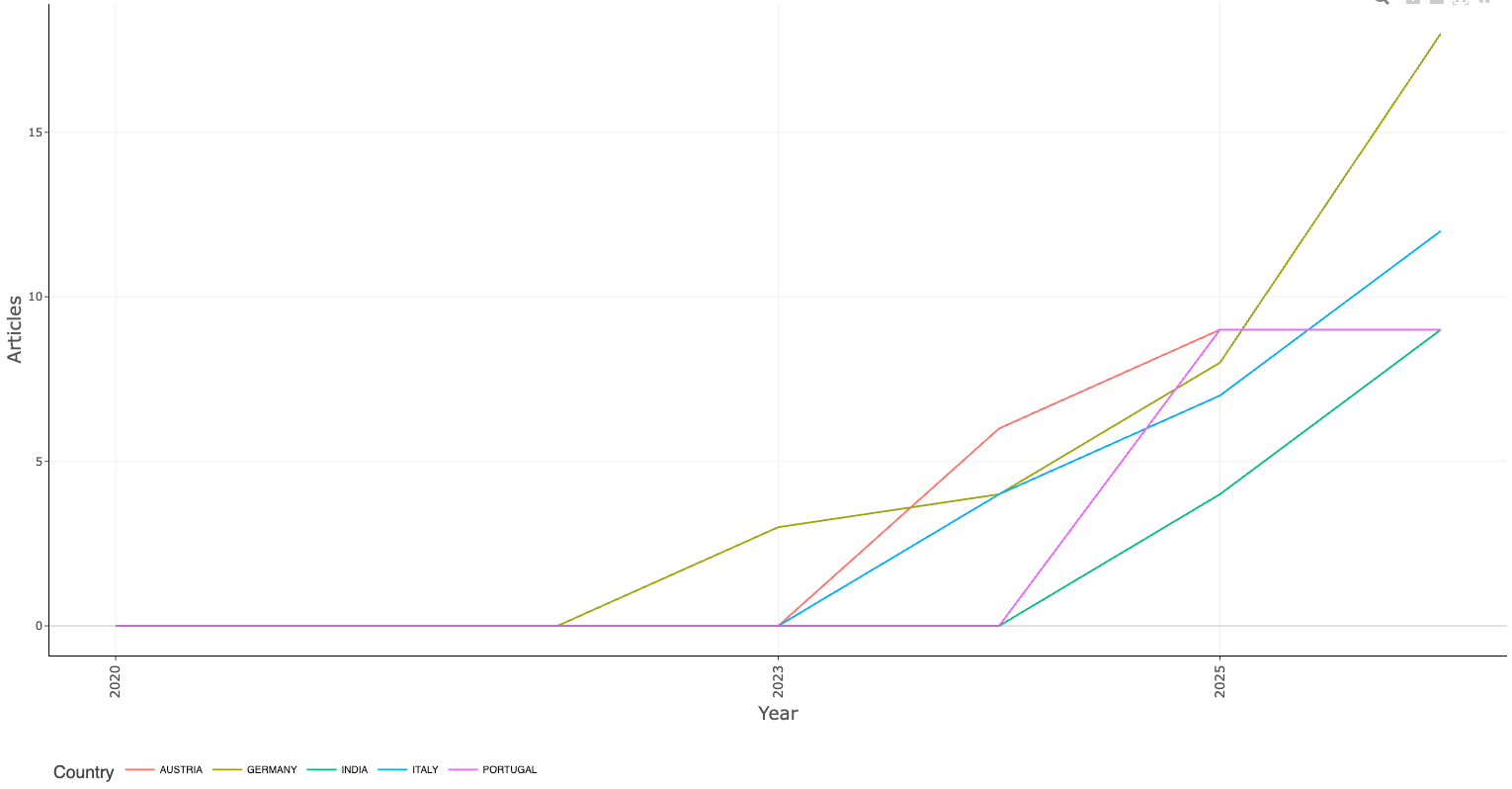
| GERMANY | 2020 | 0 |
| GERMANY | 2022 | 0 |
| GERMANY | 2023 | 3 |
| GERMANY | 2024 | 4 |
| GERMANY | 2025 | 8 |
| GERMANY | 2026 | 18 |
| AUSTRIA | 2020 | 0 |
| AUSTRIA | 2022 | 0 |
| AUSTRIA | 2023 | 0 |
| AUSTRIA | 2024 | 6 |
| AUSTRIA | 2025 | 9 |
| AUSTRIA | 2026 | 9 |
| ITALY | 2020 | 0 |
| ITALY | 2022 | 0 |
| ITALY | 2023 | 0 |
| ITALY | 2024 | 4 |
| ITALY | 2025 | 7 |
| ITALY | 2026 | 12 |
| INDIA | 2020 | 0 |
| INDIA | 2022 | 0 |
| INDIA | 2023 | 0 |
| INDIA | 2024 | 0 |
| INDIA | 2025 | 4 |
| INDIA | 2026 | 9 |
| PORTUGAL | 2020 | 0 |
| PORTUGAL | 2022 | 0 |
| PORTUGAL | 2023 | 0 |
| PORTUGAL | 2024 | 0 |
| PORTUGAL | 2025 | 9 |
| PORTUGAL | 2026 | 9 |
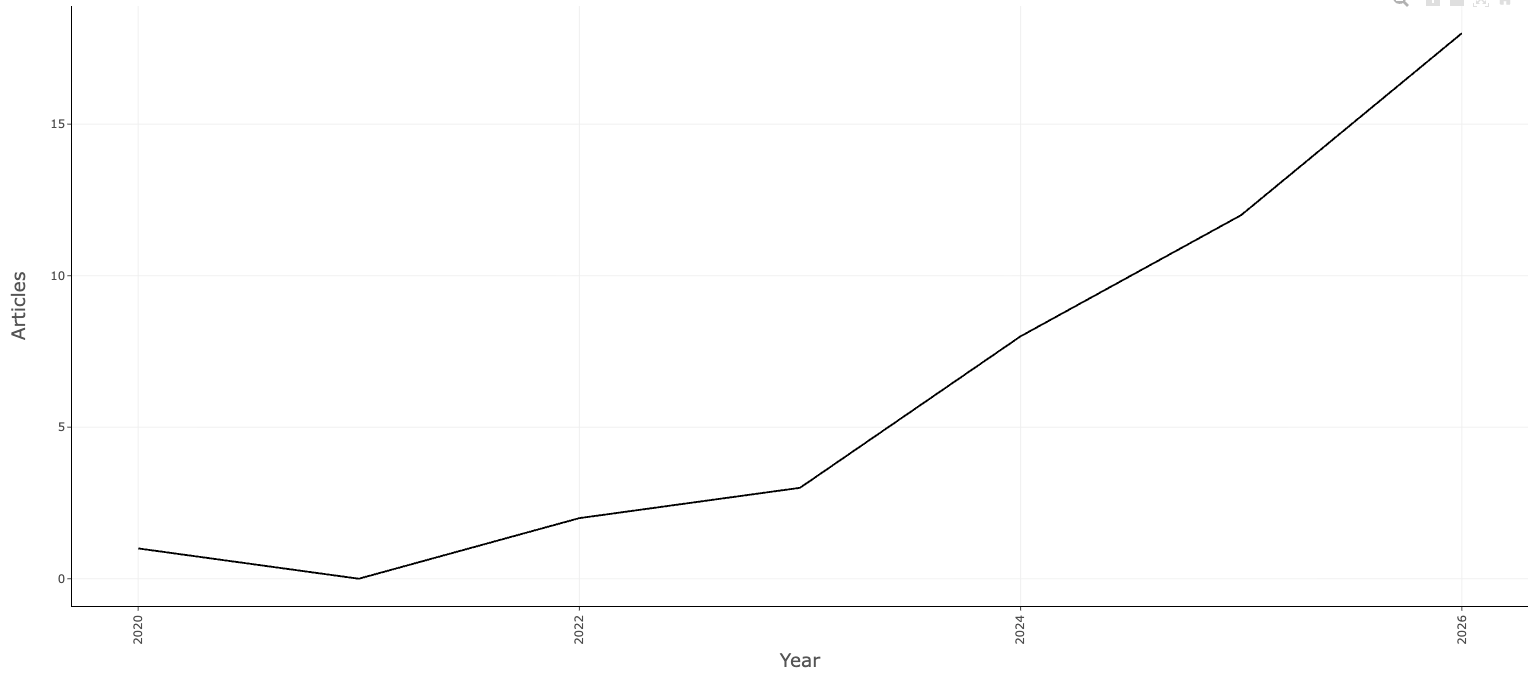
Annual Scientific Production
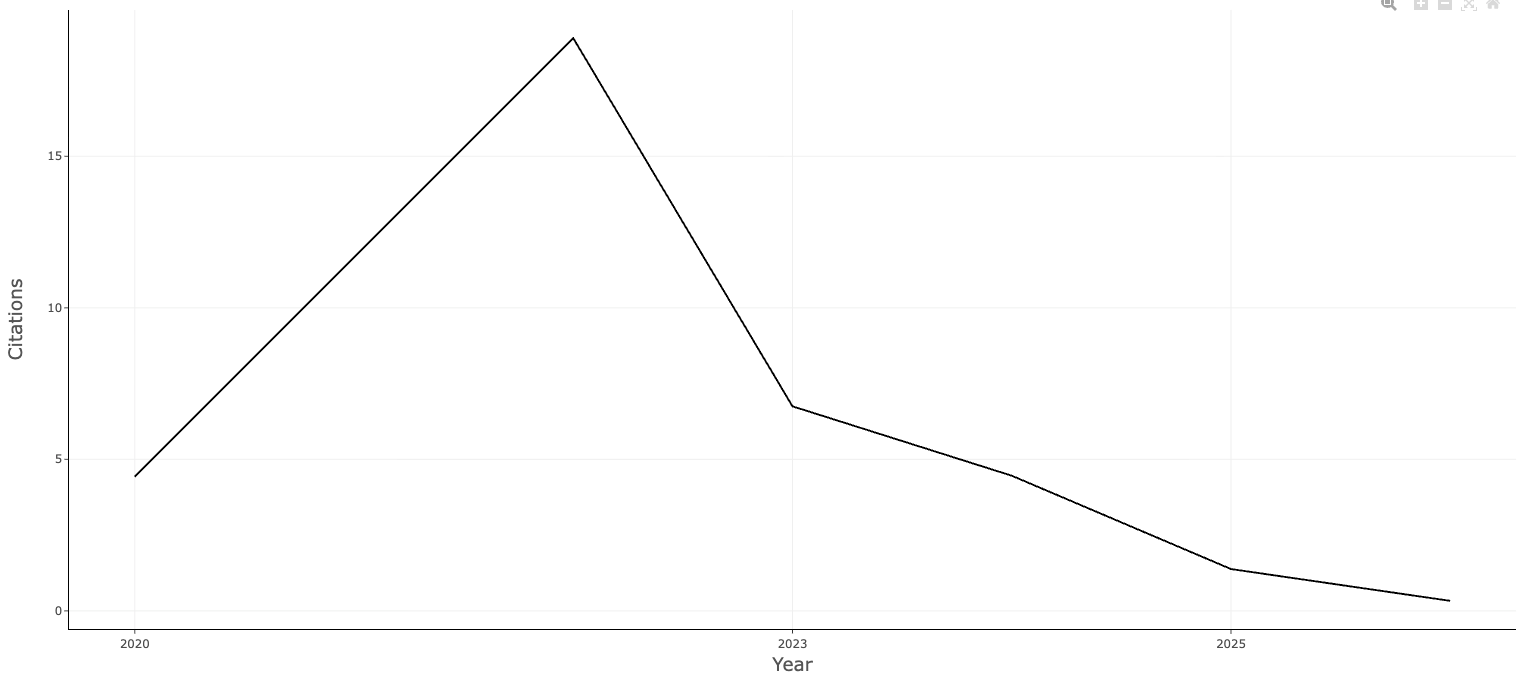
Average Citations Per Year
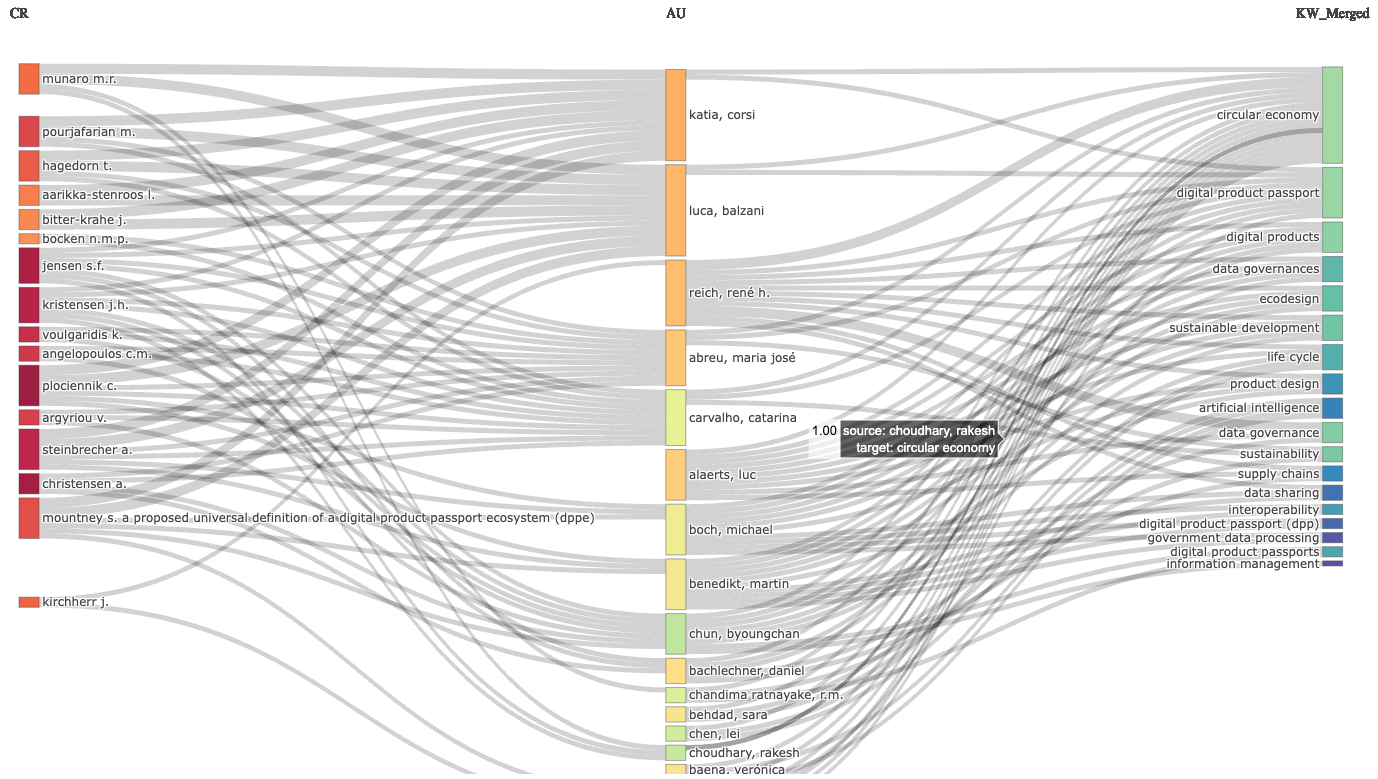
Three-Field Plot
Only 2 papers are connected to the keyword “Data Governance”:
- Reich R.H.; Alaerts L.; Van Acker K. “Towards a service-oriented architecture for information systems in the circular economy”. Abstract: “Information gaps are one of the significant barriers to a flourishing circular economy (CE). Information systems (IS) are implemented to overcome these gaps as part of digitalization efforts. In the CE context, IS can provide insights into the sustainability and circularity of a product and its value chain. In fact, many products come into existence through supply chains encompassing plentiful suppliers and complex in-use and after-use streams. Implementing CE IS, like obligatory product passports, will significantly scale up information technologies (IT) use. Environmental impacts through IT use, and diverse product lifecycles call for an architecture that allows such a degree of complexity while minimizing burdens. This conference paper summarizes our preliminary results on designing an architecture for CE IS. First, we reviewed the literature on product passports. We created an architecture based on the design science methodology, including a meta-model providing an overview of all concepts. We also show how the architecture can facilitate the CE IS implementation by an example case of remanufacturing. Our results advocate rethinking the concept of product-centered systems towards IS that are more based on CE and digital services. © 2024 Elsevier B.V.. All rights reserved.”. Author Keywords: Circular Economy (CE); Data Governance; Design Science Research (DSR); Digital Product Passports (DPP); Green Information Systems (Green IS); Service-oriented Architecture (SOA); Twin Transition
- Steinwender A.; Gallina V.; Litvyak O.; Lampoltshammer T.J.; Bachlechner D.; Schlund S. “From Analogue to Digital Product Passports in the Furniture Industry”. Abstract: “The wood industry faces challenges from multiple angles, markedly from rapidly changing market environments, policy and compliance demands, and, in general, the digitalisation of its core processes. A particularly challenging area is the transition to digitalised, cross-domain supply chain management. Thus, this paper addresses the furniture industry’s transition from analogue to Digital Product Passports (DPPs) following the EC’s initiative to promote circularity, foster innovative business models, and assist in sustainable product management. This paper provides a blueprint DPP for the furniture industry that explores not only what requirements can be expected from the upcoming regulations but also how existing data management practices can be adapted to meet these requirements. Copyright © 2024 The Authors.”. Author Keywords: circular manufacturing; data governance; data-driven supply chains; eco-design; sustainable manufacturing; sustainable supply chains; twin transition
Only 1 extra paper is connected through the keyword “Data Governances”:
- Fabianek C.; Klikovits C.; Tauber M.; Naim B.A.; Boch M.; Benedikt M. “Compliance-by-Design: Validating Decentralised Architectures for Digital Product Passports under the EU Data Governance Act”. 2025. Abstract: “The Digital Product Passport (DPP) is a cornerstone of the European Union’s sustainability and circular economy strategy. While many conceptual frameworks exist, limited work has validated DPP architectures against the regulatory requirements that govern data sharing in the EU. This paper addresses this gap by presenting and assessing a decentralised DPP architecture that integrates data intermediaries, decentralised identity, and cryptographic mechanisms. Using the EU Data Governance Act (DGA) as the primary regulatory lens-complemented by the General Data Protection Regulation (GDPR) and the Ecodesign for Sustainable Products Regulation (ESPR)-we demonstrate how key requirements such as neutrality, structural separation, fair access, registration, and confidentiality are met in practice. Validation is performed through early-stage pilots in the PACEDPP and USEFLEDS projects, which provide empirical evidence of compliance-by-design approaches. Findings highlight that decentralised governance and regulated data intermediaries not only enhance interoperability and trust but also operationalize regulatory mandates, creating a robust foundation for legally compliant, scalable, and sustainable DPP ecosystems. © 2025 IFIP.”. Author Keywords: Battery Passport; Data Governance Act (DGA); Data Intermediaries; Data Security; Data Sovereignty; Decentralised Governance; Digital Product Passport (DPP).
Therefore, from this query, only 3 papers have the authors´ keyword “data governance” or “data governances”
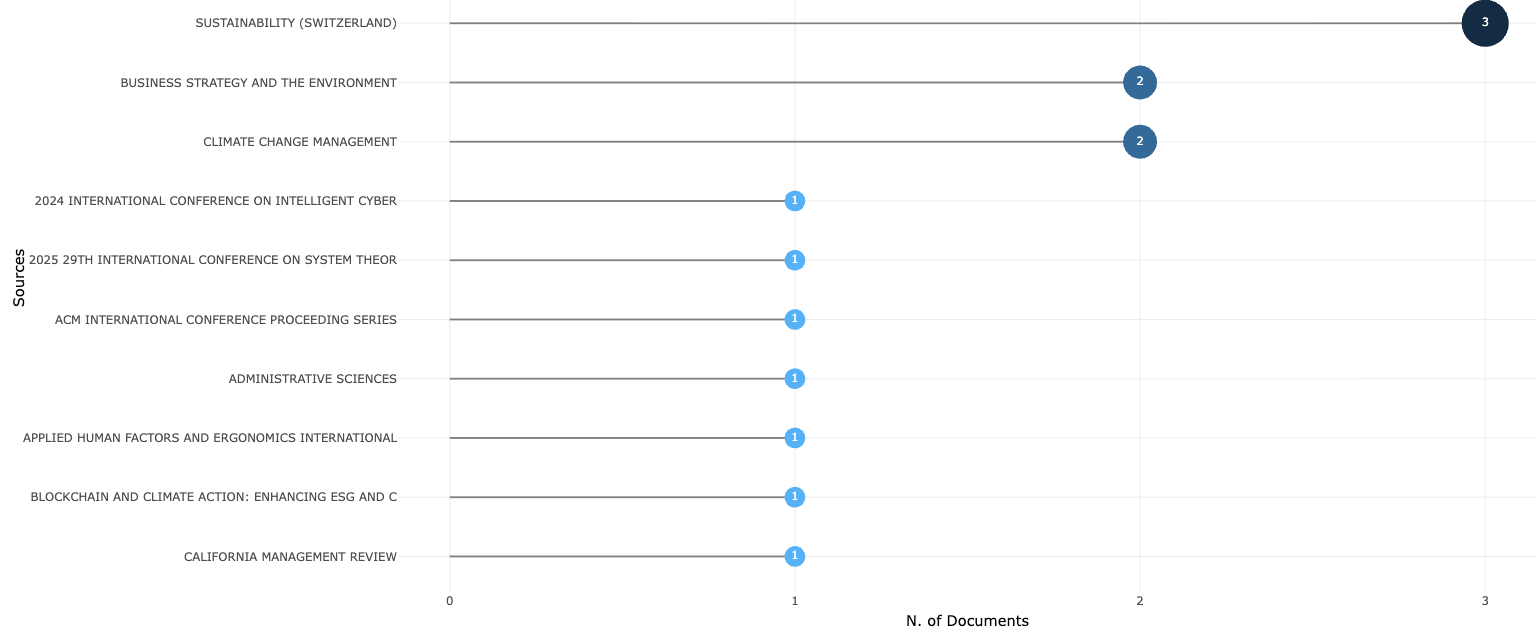
Most Relevant Sources
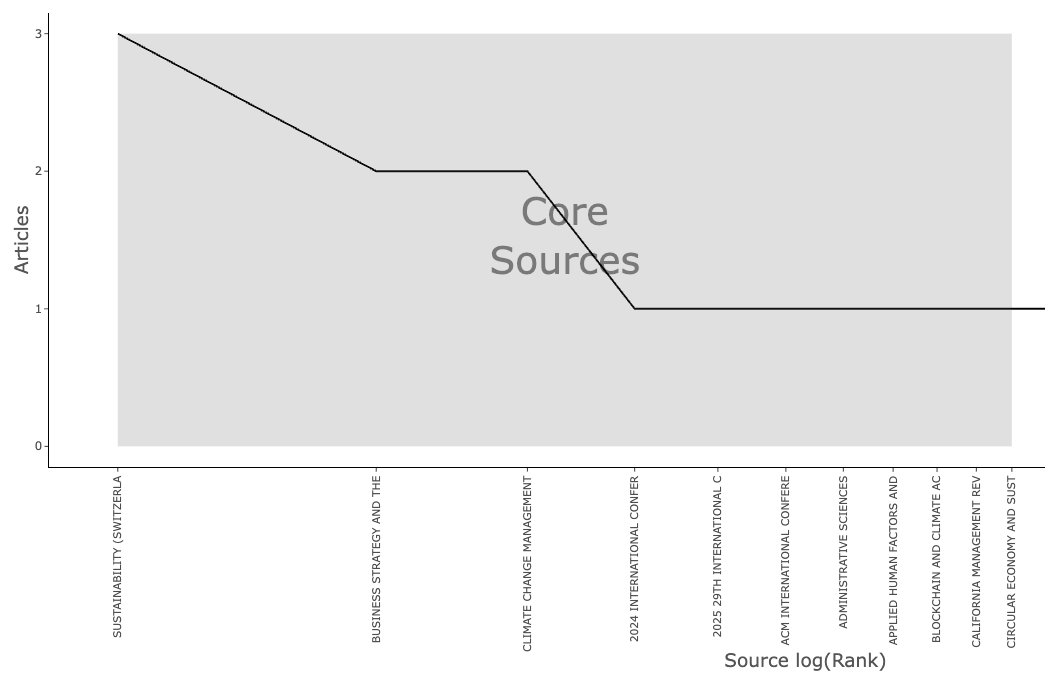
Core Sources by Bradford’s Law
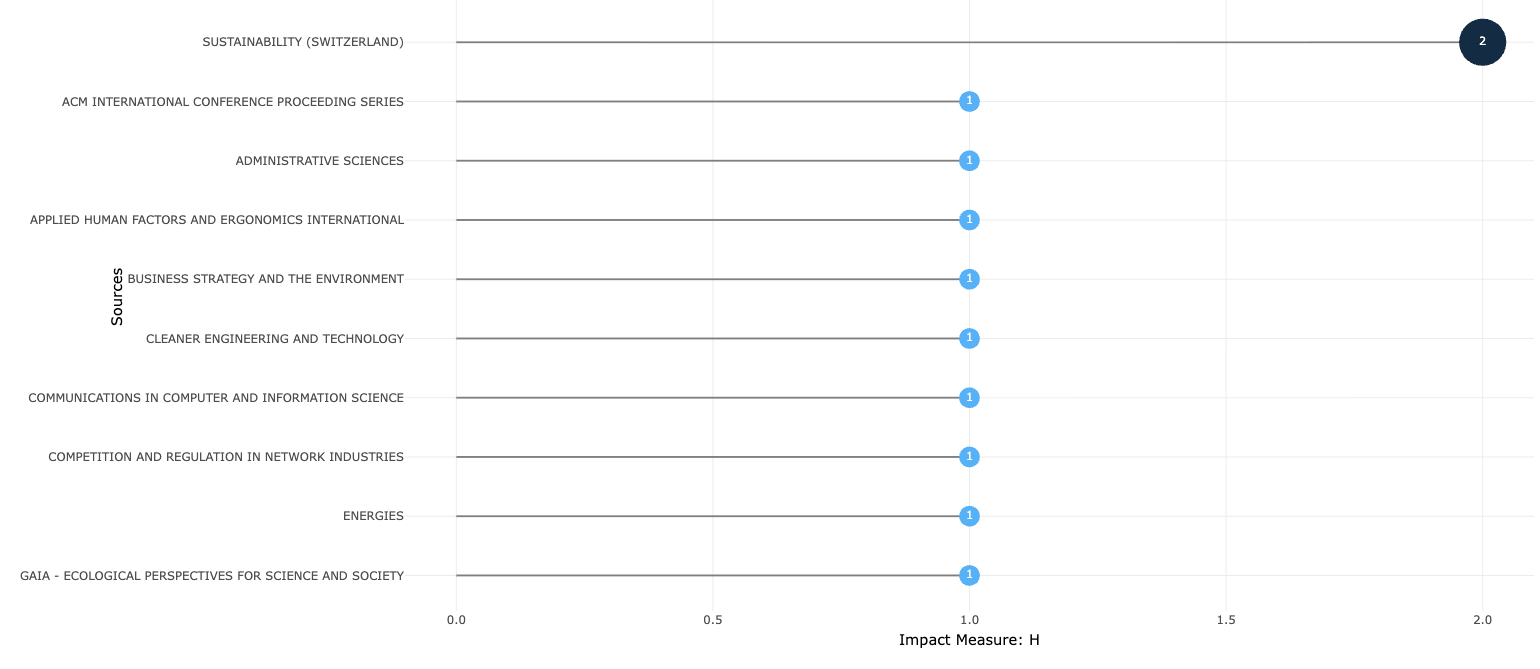
Sources’ Local Impact
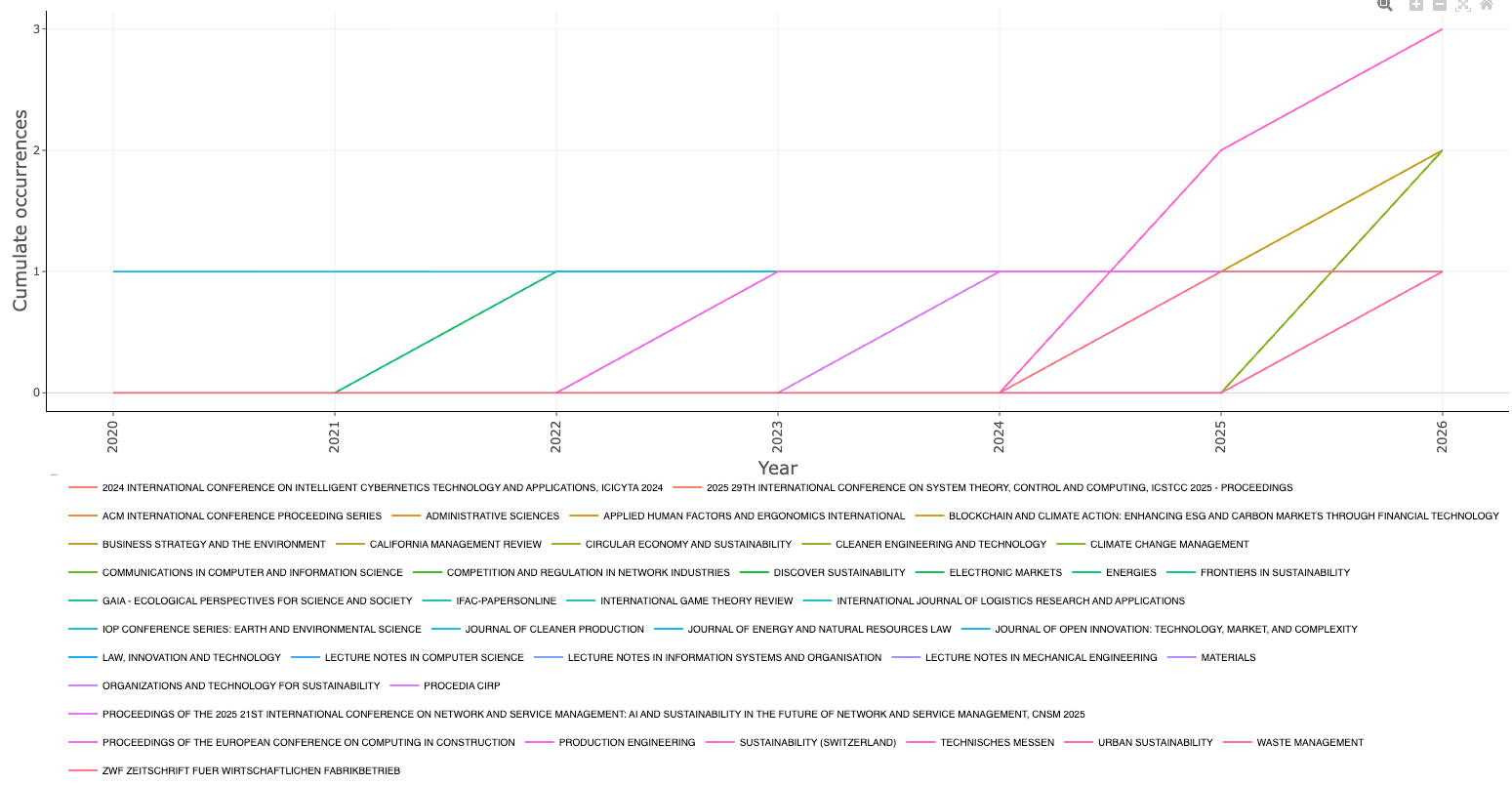
Sources’ Production over Time
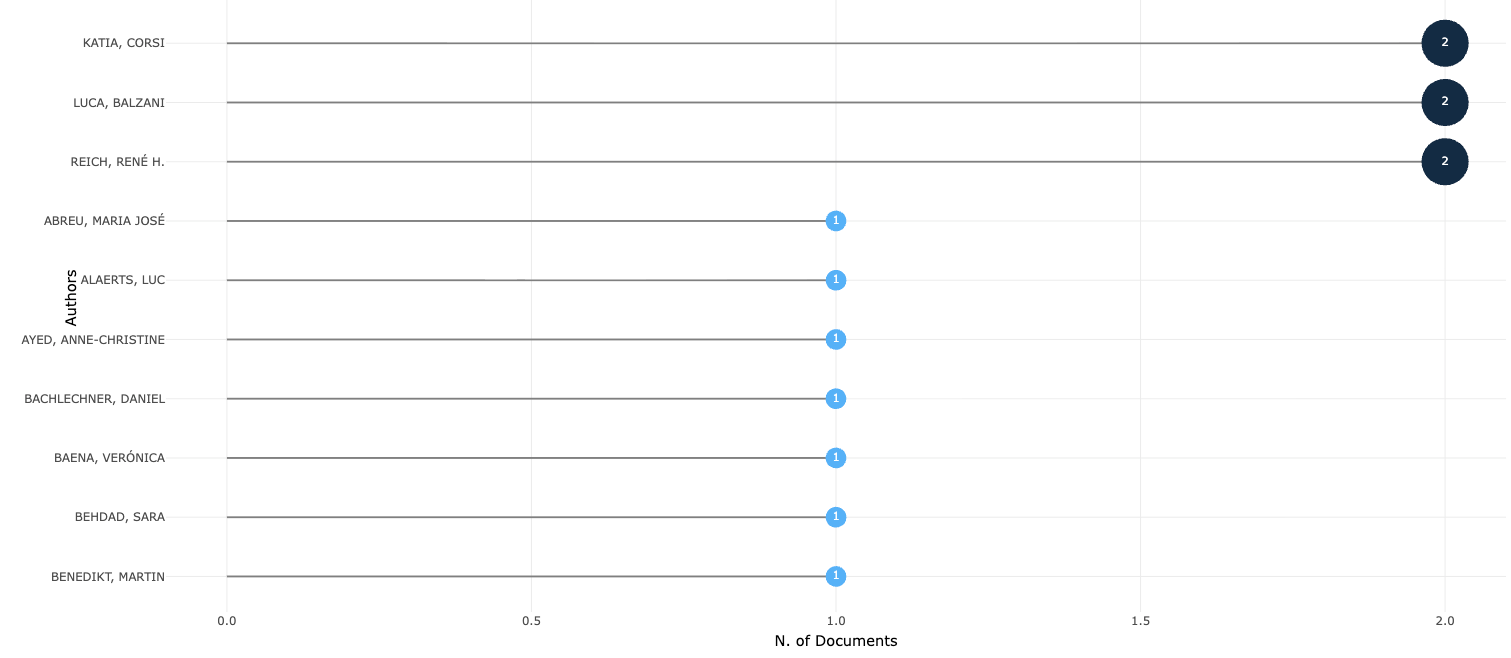
Most Relevant Authors
- Authors: Luca B.; Katia C.; Title: “Drivers from Extended Institutional Theory Supporting the DPP as a Tool of CE”; Year: 2024; Abstract: “Purpose: To facilitate a circular economy (CE) transition, the European Union (EU) introduced digital product passports (DPPs) as useful tools for providing information on products’ compositions, origins and disposal. DPPs enable product-related information and processes to be electronically registered and shared amongst supply chain businesses, consumers and authorities. In this work we aimed to integrate findings from the available literature to offer insight into the conceptual framework of DPPs as circularity tools and their roles in companies in terms of legitimacy, compliance and relevance to the many sustainability variables. Design: This work conceptualizes DPPs based on theoretical frameworks for promoting companies’ sustainability and outlines prospects for using DPPs. A critical analytical review of the academic literature and available professional documents has been conducted to investigate DPPs’ connotations. Then the new institutional theory and its extended version has been applied to DPPs to enhance conceptualization. Originality/value: Although some authors have analysed DPPs, most works offer an engineering and IT point of view. In this work we attempt to enhance the descriptive conceptualization of DPPs by focusing on their influence on organizations’ behaviour and the relationship between organizations and the social context, thus offering a business perspective. Research implications: DPPs facilitate the harmonization of economic development (efficiency) and environmental protection (legitimacy). The application of DPPs could be explored with a focus on additional devices and technologies, such as blockchains. © The Author(s), under exclusive license to Springer Nature Switzerland AG 2024.”
- Luca B.; Katia C. Digital product passports: Conceptualization and applications in a circular economy; 2024; Organizations and Technology for Sustainability; To facilitate a circular economy (CE) transition, the European Union (EU) introduced digital product passports (DPPs) as useful tools for providing information on products’ compositions, origins and disposal. DPPs enable product-related information and processes to be electronically registered and shared amongst supply chain businesses, consumers and authorities. DPPs meet twin energy and digital transition objectives and promote a CE through the use of digital technology. To foster high levels of information security and transparency among actors, some researchers have proposed matching DDPs with other technology-based solutions. DPPs can provide opportunities to improve resource and energy efficiency and reduce greenhouse gas (GHG) emissions, but they can also improve sustainability disclosure by providing reliable information. This chapter conceptualizes DPPs based on theoretical frameworks for promoting companies’ sustainability and outlines prospects for using DPPs. A critical analytical review of the academic literature and available professional documents has been conducted to investigate DPPs’ connotations. Then the new institutional theory and its extended version has been applied to DPPs to enhance conceptualization. Considering that DPPs facilitate the harmonization of economic development (efficiency) and environmental protection (legitimacy), new potential uses and lines of research for DPPs are suggested. © 2025 Elisabetta Magnaghi and Eleonora Veglianti. All rights reserved.
- Reich R.H.; Alaerts L.; Van Acker K.; “Towards a service-oriented architecture for information systems in the circular economy”; 2024; “Procedia CIRP”; Information gaps are one of the significant barriers to a flourishing circular economy (CE). Information systems (IS) are implemented to overcome these gaps as part of digitalization efforts. In the CE context, IS can provide insights into the sustainability and circularity of a product and its value chain. In fact, many products come into existence through supply chains encompassing plentiful suppliers and complex in-use and after-use streams. Implementing CE IS, like obligatory product passports, will significantly scale up information technologies (IT) use. Environmental impacts through IT use, and diverse product lifecycles call for an architecture that allows such a degree of complexity while minimizing burdens. This conference paper summarizes our preliminary results on designing an architecture for CE IS. First, we reviewed the literature on product passports. We created an architecture based on the design science methodology, including a meta-model providing an overview of all concepts. We also show how the architecture can facilitate the CE IS implementation by an example case of remanufacturing. Our results advocate rethinking the concept of product-centered systems towards IS that are more based on CE and digital services. © 2024 Elsevier B.V.. All rights reserved.
- Ducuing C.; Reich R.H.; “Data governance: Digital product passports as a case study”; 2023; “Competition and Regulation in Network Industries”; “The circular economy (‘CE’) is a political goal to shift the economy towards a more circular and sustainable one. Data sharing shall close information gaps in the predominant economy and, hence, form the backbone of the transition to a CE. As part of the recent legislative proposals from the EC, “digital product passports” (‘DPPs’) are expected to constitute one-stop shops for such data and information delivery. The principal idea of DPPs is to provide product information to interested stakeholders within and outside the product value chain. However, many challenges arise with DPPs, in particular how to reconcile a broad (if no ‘open’) access to data while preserving the (legally protected) interests of certain actors, and the lack of trust concerning data use and quality between the actors. Our hypothesis are (i.) that such challenges are related to the absence of an appropriate (data) governance model for DPPs and (ii.) that data governance as a main concern within the data economy agenda could inform the regulation and operationalisation of DPPs. We analyse the – lack of – (data) governance of DPPs, both in the literature and in the recent legislative proposals from the EC. We find that data governance is significantly overlooked or considered only from a pure technological perspective (techno-solutionism), which is likely to jeopardise DPPs. As both a confirmation and a way forward, we establish connections to data governance as per the data economy agenda. In turn, the analysis of DPPs governance informs the general discussion on data governance. © The Author(s) 2023.
Katia Corsi
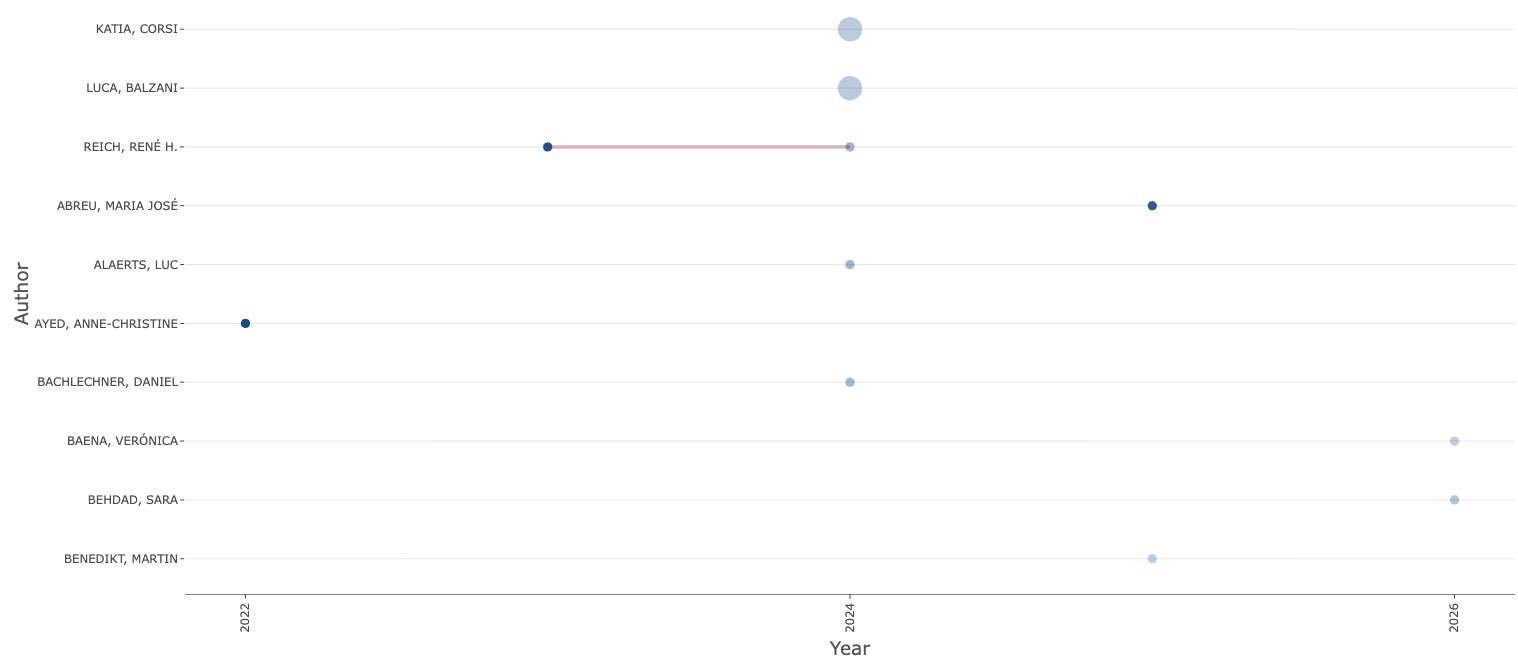
Authors’ Production over Time
Authors’ Local Impact
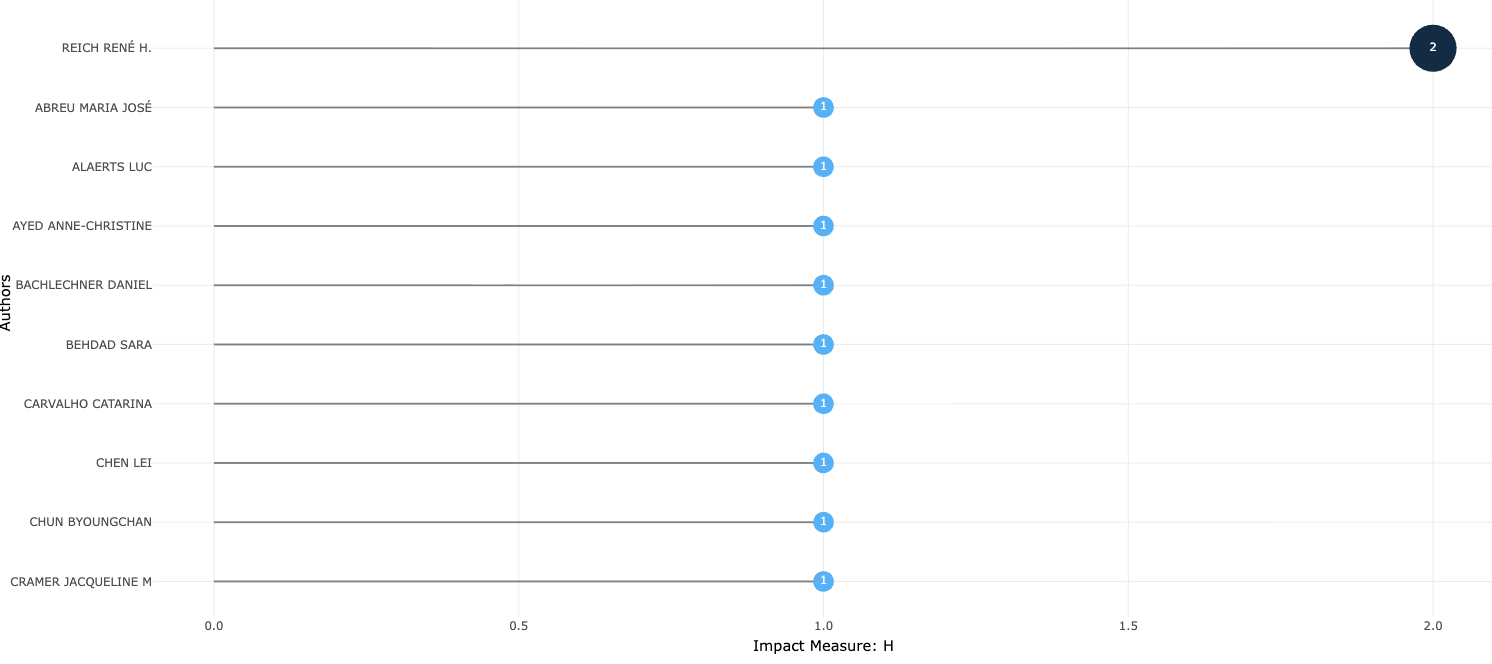
Most Relevant Affiliations
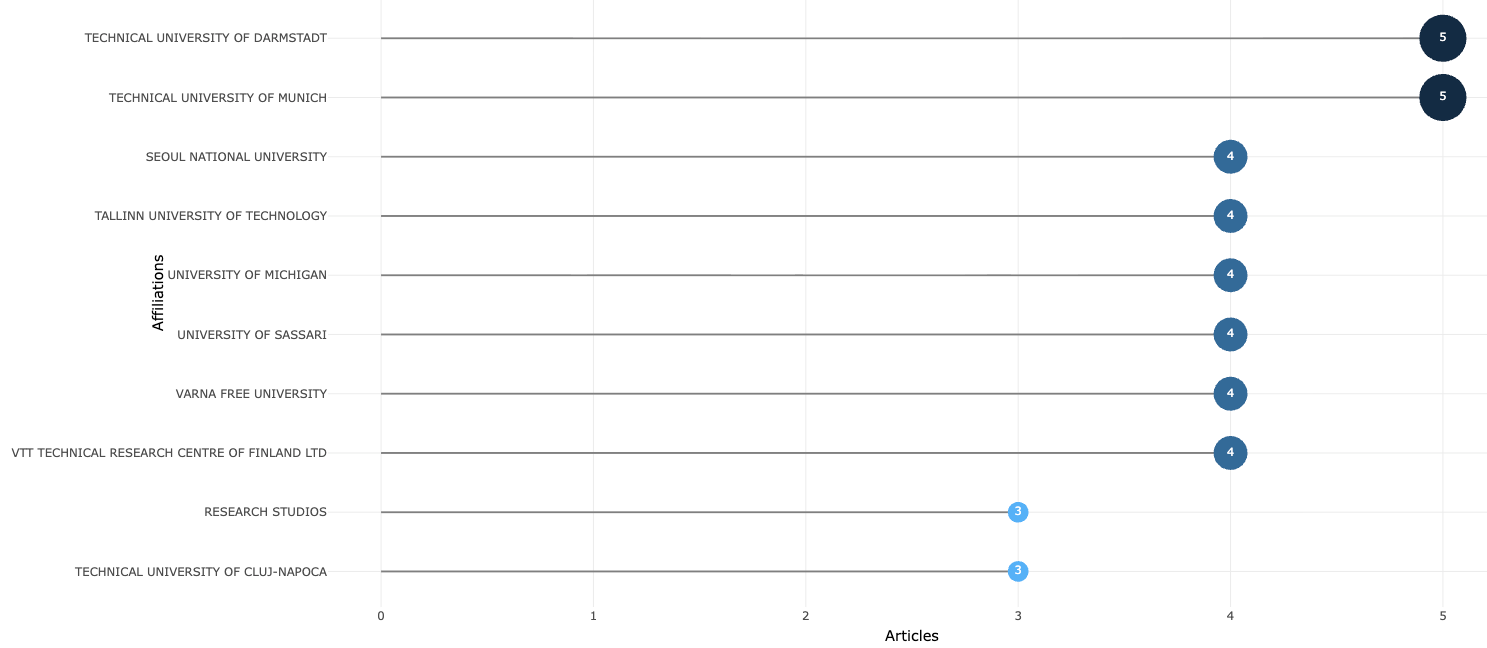
Affiliations’ Production over Time
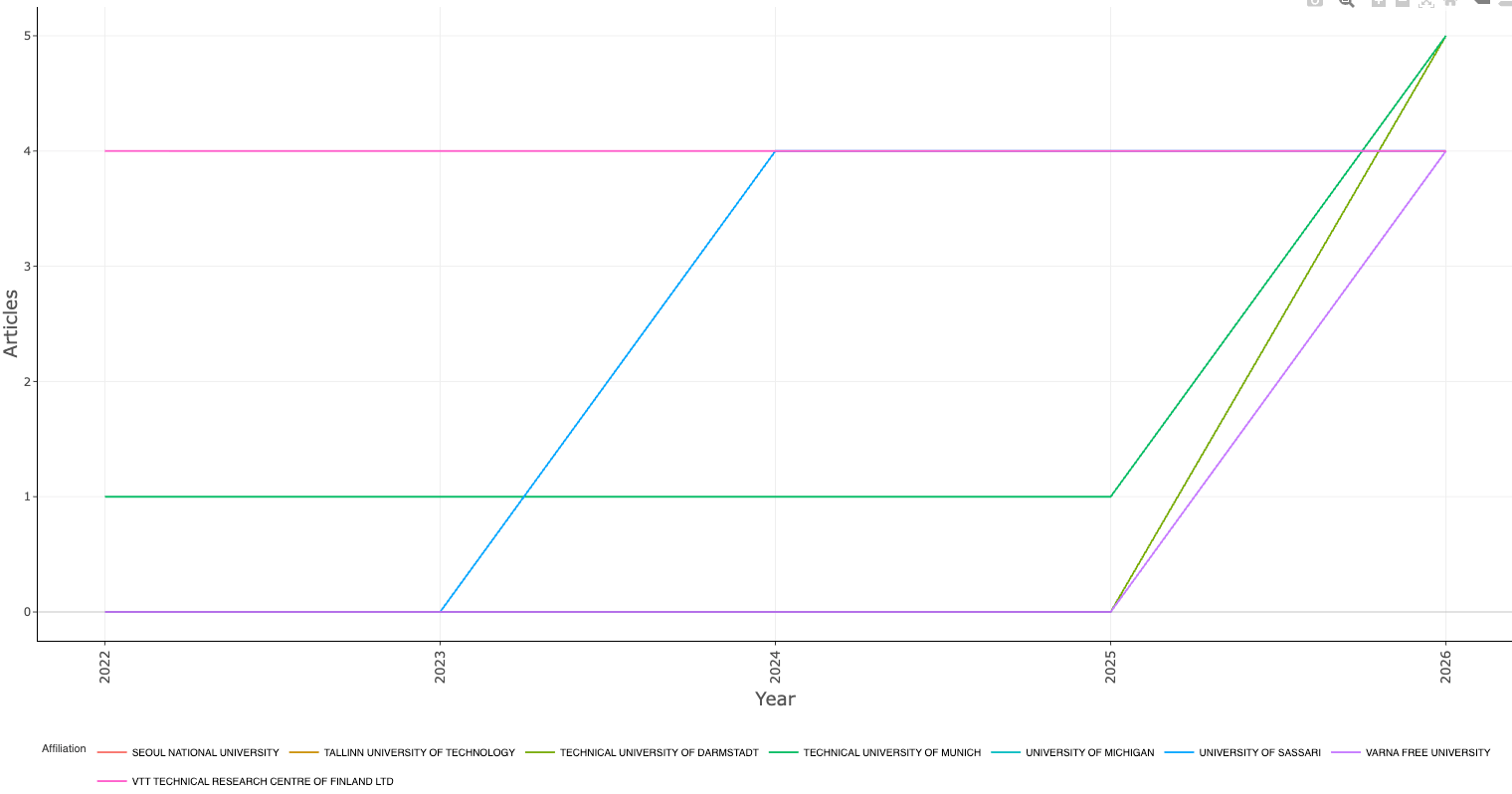
Corresponding Author’s Countries
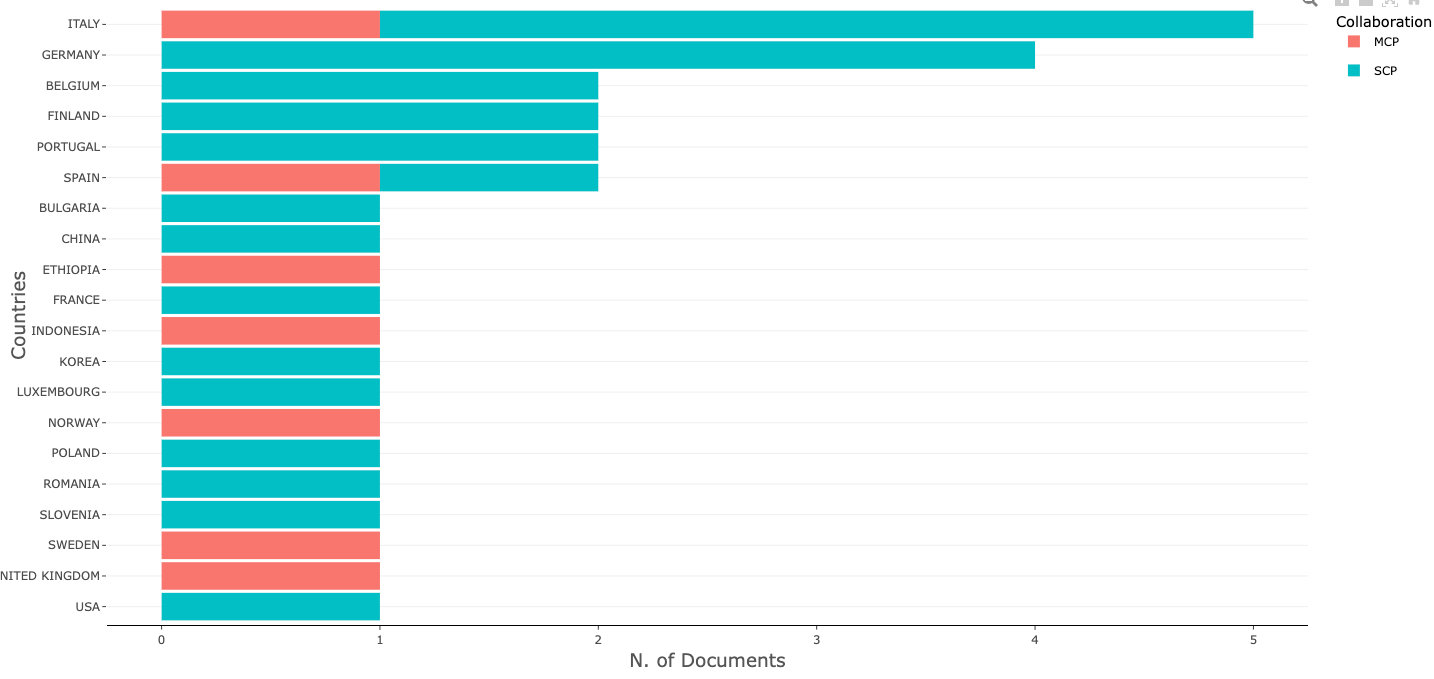
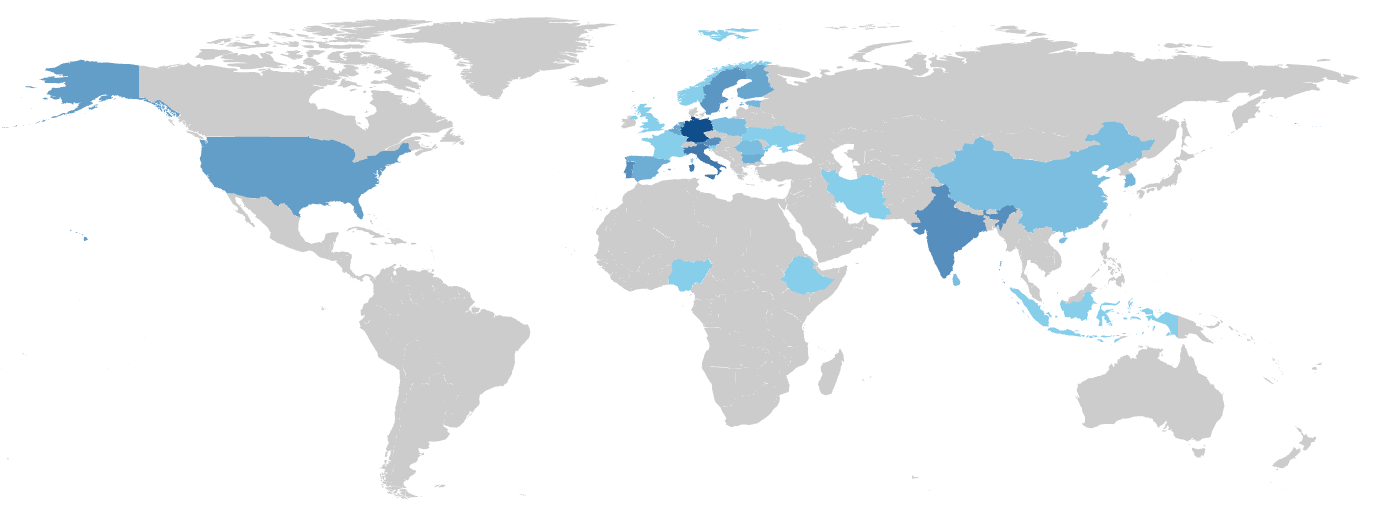
Countries’ Scientific Production
Countries’ Production over Time
| GERMANY | 2020 | 0 |
| GERMANY | 2022 | 0 |
| GERMANY | 2023 | 3 |
| GERMANY | 2024 | 4 |
| GERMANY | 2025 | 8 |
| GERMANY | 2026 | 18 |
| AUSTRIA | 2020 | 0 |
| AUSTRIA | 2022 | 0 |
| AUSTRIA | 2023 | 0 |
| AUSTRIA | 2024 | 6 |
| AUSTRIA | 2025 | 9 |
| AUSTRIA | 2026 | 9 |
| ITALY | 2020 | 0 |
| ITALY | 2022 | 0 |
| ITALY | 2023 | 0 |
| ITALY | 2024 | 4 |
| ITALY | 2025 | 7 |
| ITALY | 2026 | 12 |
| INDIA | 2020 | 0 |
| INDIA | 2022 | 0 |
| INDIA | 2023 | 0 |
| INDIA | 2024 | 0 |
| INDIA | 2025 | 4 |
| INDIA | 2026 | 9 |
| PORTUGAL | 2020 | 0 |
| PORTUGAL | 2022 | 0 |
| PORTUGAL | 2023 | 0 |
| PORTUGAL | 2024 | 0 |
| PORTUGAL | 2025 | 9 |
| PORTUGAL | 2026 | 9 |
Most Cited Countries
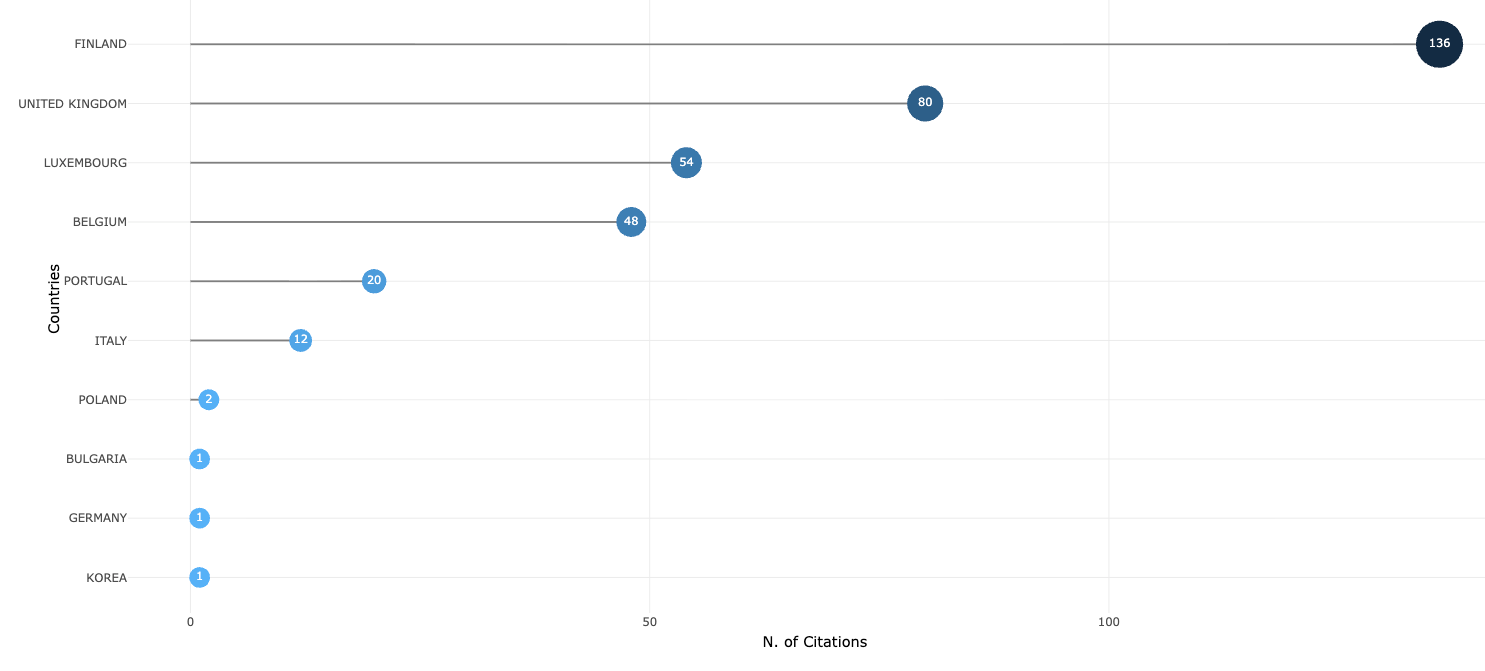
| FINLAND | 136 | 68.00 |
| UNITED KINGDOM | 80 | 80.00 |
| LUXEMBOURG | 54 | 54.00 |
| BELGIUM | 48 | 24.00 |
| PORTUGAL | 20 | 10.00 |
| ITALY | 12 | 2.40 |
| POLAND | 2 | 2.00 |
| BULGARIA | 1 | 1.00 |
| GERMANY | 1 | 0.20 |
| KOREA | 1 | 1.00 |
| SPAIN | 1 | 0.50 |
| USA | 1 | 1.00 |
| CHINA | 0 | 0.00 |
| ETHIOPIA | 0 | 0.00 |
| FRANCE | 0 | 0.00 |
| INDONESIA | 0 | 0.00 |
| NORWAY | 0 | 0.00 |
| ROMANIA | 0 | 0.00 |
| SLOVENIA | 0 | 0.00 |
| SWEDEN | 0 | 0.00 |
Most Global Cited Documents
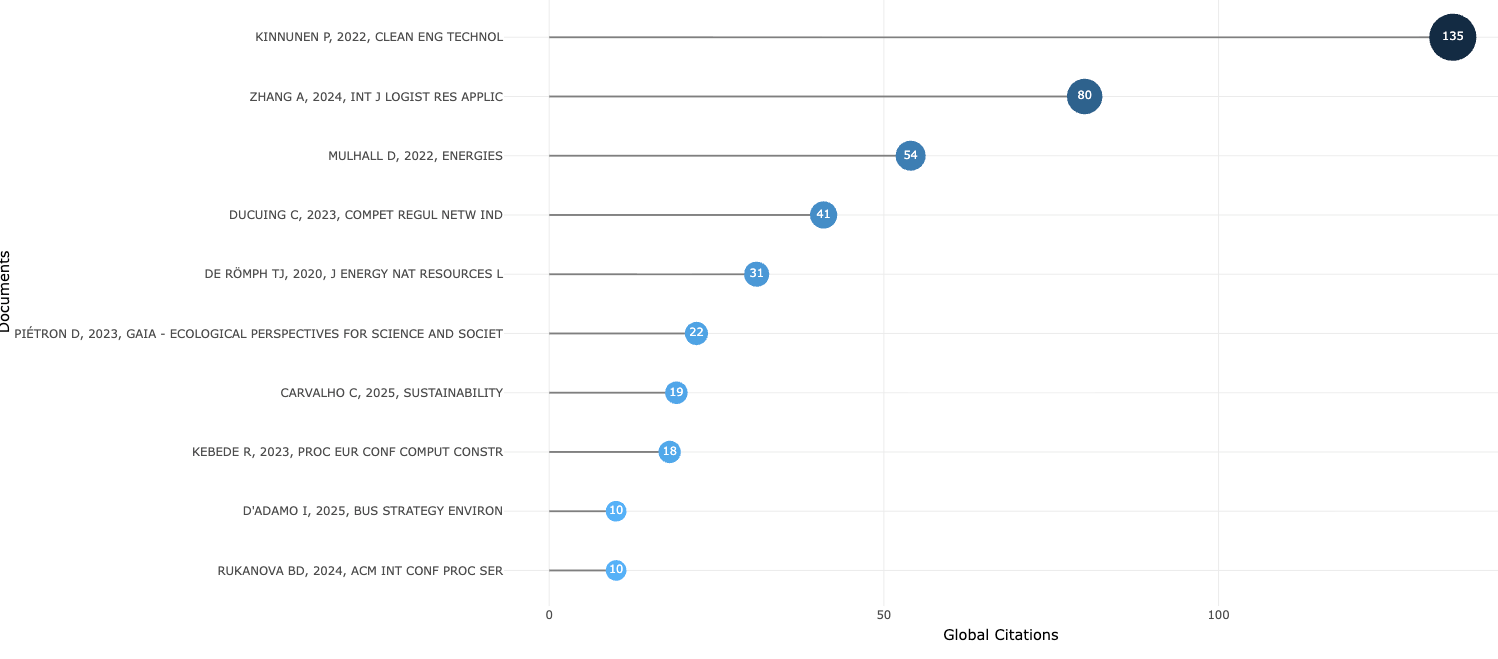
| KINNUNEN P, 2022, CLEAN ENG TECHNOL | 10.1016/j.clet.2022.100499 | 135 | 27.00 | 1.43 |
| ZHANG A, 2024, INT J LOGIST RES APPLIC | 10.1080/13675567.2024.2374256 | 80 | 26.67 | 5.98 |
| MULHALL D, 2022, ENERGIES | 10.3390/en15093397 | 54 | 10.80 | 0.57 |
| DUCUING C, 2023, COMPET REGUL NETW IND | 10.1177/17835917231152799 | 41 | 10.25 | 1.52 |
| DE RÖMPH TJ, 2020, J ENERGY NAT RESOURCES L | 10.1080/02646811.2020.1770961 | 31 | 4.43 | 1.00 |
| PIÉTRON D, 2023, GAIA – ECOLOGICAL PERSPECTIVES FOR SCIENCE AND SOCIETY | 10.14512/gaia.32.S1.7 | 22 | 5.50 | 0.81 |
| CARVALHO C, 2025, SUSTAINABILITY | 10.3390/su17051802 | 19 | 9.50 | 6.91 |
| KEBEDE R, 2023, PROC EUR CONF COMPUT CONSTR | 10.35490/EC3.2023.245 | 18 | 4.50 | 0.67 |
| D’ADAMO I, 2025, BUS STRATEGY ENVIRON | 10.1002/bse.70065 | 10 | 5.00 | 3.64 |
| RUKANOVA BD, 2024, ACM INT CONF PROC SER | 10.1145/3657054.3657196 | 10 | 3.33 | 0.75 |
| REICH RH, 2024, PROCEDIA CIRP | 10.1016/j.procir.2024.02.020 | 7 | 2.33 | 0.52 |
| STEINWENDER A, 2024, IFAC-PAPERSONLINE | 10.1016/j.ifacol.2024.09.175 | 6 | 2.00 | 0.45 |
| DALIPI F, 2024, APPL HUMAN FACTOR ERGON INT | 10.54941/ahfe1004559 | 3 | 1.00 | 0.22 |
| PIMENOW S, 2026, SUSTAINABILITY | 10.3390/su18020562 | 2 | 2.00 | 6.00 |
| HAMIDKHANIHA S, 2025, IOP CONF SER EARTH ENVIRON SCI | 10.1088/1755-1315/1568/1/012026 | 1 | 0.50 | 0.36 |
| YUAN L, 2025, LAW INNOV TECHNOL | 10.1080/17579961.2025.2593771 | 1 | 0.50 | 0.36 |
| MOÇO H, 2025, COMMUN COMPUT INFO SCI | 10.1007/978-3-031-80775-6_14 | 1 | 0.50 | 0.36 |
| LUCA B, 2024, LECT NOTES INF SYS ORGAN | 10.1007/978-3-031-75586-6_7 | 1 | 0.33 | 0.07 |
| GIOVANNI PD, 2026, INT GAME THEOR REV | 10.1142/S0219198925400031 | 1 | 1.00 | 3.00 |
| JOO H, 2026, J CLEAN PROD | 10.1016/j.jclepro.2025.147403 | 1 | 1.00 | 3.00 |
| NIEDERHAUSEN J, 2025, TECH MESSEN | 10.1515/teme-2025-0040 | 1 | 0.50 | 0.36 |
| ESMAEILIAN B, 2026, WASTE MANAGE | 10.1016/j.wasman.2025.115302 | 1 | 1.00 | 3.00 |
| TANKOVA E, 2026, ADM SCI | 10.3390/admsci16020107 | 1 | 1.00 | 3.00 |
| SHAMINI M, 2026, DISCOV SUSTAIN | 10.1007/s43621-026-02671-6 | 0 | 0.00 | 0.00 |
| SCHNICKE F, 2025, ZWF | 10.1515/zwf-2025-1004 | 0 | 0.00 | 0.00 |
| HULEA M, 2025, INT CONF SYST THEORY, CONTROL COMPUT, ICSTCC – PROC | 10.1109/ICSTCC66753.2025.11240327 | 0 | 0.00 | 0.00 |
| MUNONYE WC, 2026, FRONT SUSTAIN | 10.3389/frsus.2025.1588374 | 0 | 0.00 | 0.00 |
| IBITZ A, 2026, CIRC ECON SUSTAIN | 10.1007/s43615-026-00742-4 | 0 | 0.00 | 0.00 |
| JUNEJO S, 2026, CLIMATE CHANGE MANAG | 10.1007/978-3-032-03484-7_17 | 0 | 0.00 | 0.00 |
| FABIANEK C, 2025, PROC INT CONF NETW SERV MANAG: AI SUSTAIN FUTURE NETW SERV MANAG, CNSM | 10.23919/CNSM67658.2025.11297456 | 0 | 0.00 | 0.00 |
| THAKUR V, 2026, CLIMATE CHANGE MANAG | 10.1007/978-3-032-03484-7_16 | 0 | 0.00 | 0.00 |
| ENGEL B, 2026, PROD ENG | 10.1007/s11740-026-01420-y | 0 | 0.00 | 0.00 |
| MÖSLEIN F, 2025, BLOCKCHAIN AND CLIMATE ACTION: ENHANCING ESG AND CARBON MARKETS THROUGH FINANCIAL TECHNOLOGY | 10.1515/9783111706719-009 | 0 | 0.00 | 0.00 |
| TAMM M, 2026, LECT NOTES COMPUT SCI | 10.1007/978-3-032-11976-6_23 | 0 | 0.00 | 0.00 |
| BAENA V, 2026, BUS STRATEGY ENVIRON | 10.1002/bse.70677 | 0 | 0.00 | 0.00 |
| NARAYAN S, 2025, URBAN SUSTAIN | 10.1007/978-981-95-2976-6_10 | 0 | 0.00 | 0.00 |
| MADUSHAN FERNANDO W, 2026, J OPEN INNOV: TECHNOL MARK COMPLEX | 10.1016/j.joitmc.2026.100736 | 0 | 0.00 | 0.00 |
| DATTA SK, 2024, INT CONF INTELL CYBERN TECHNOL APPL, ICICYTA | 10.1109/ICICYTA64807.2024.10913245 | 0 | 0.00 | 0.00 |
| BÖTTCHER TP, 2026, ELECTRON MARK | 10.1007/s12525-026-00888-x | 0 | 0.00 | 0.00 |
| NARALOČNIK A, 2025, SUSTAINABILITY | 10.3390/su172411224 | 0 | 0.00 | 0.00 |
| LUCA B, 2024, ORGAN AND TECHNOL FOR SUSTAIN | 0 | 0.00 | 0.00 | |
| HENRY L, 2026, CALIF MANAGE REV | 10.1177/00081256251380360 | 0 | 0.00 | 0.00 |
| ZHANG Q, 2026, MATER | 10.3390/ma19061235 | 0 | 0.00 | 0.00 |
| PIETRONI G, 2026, LECT NOTES MECH ENG | 10.1007/978-3-032-14953-4_17 | 0 | 0.00 | 0.00 |
Most Local Cited References
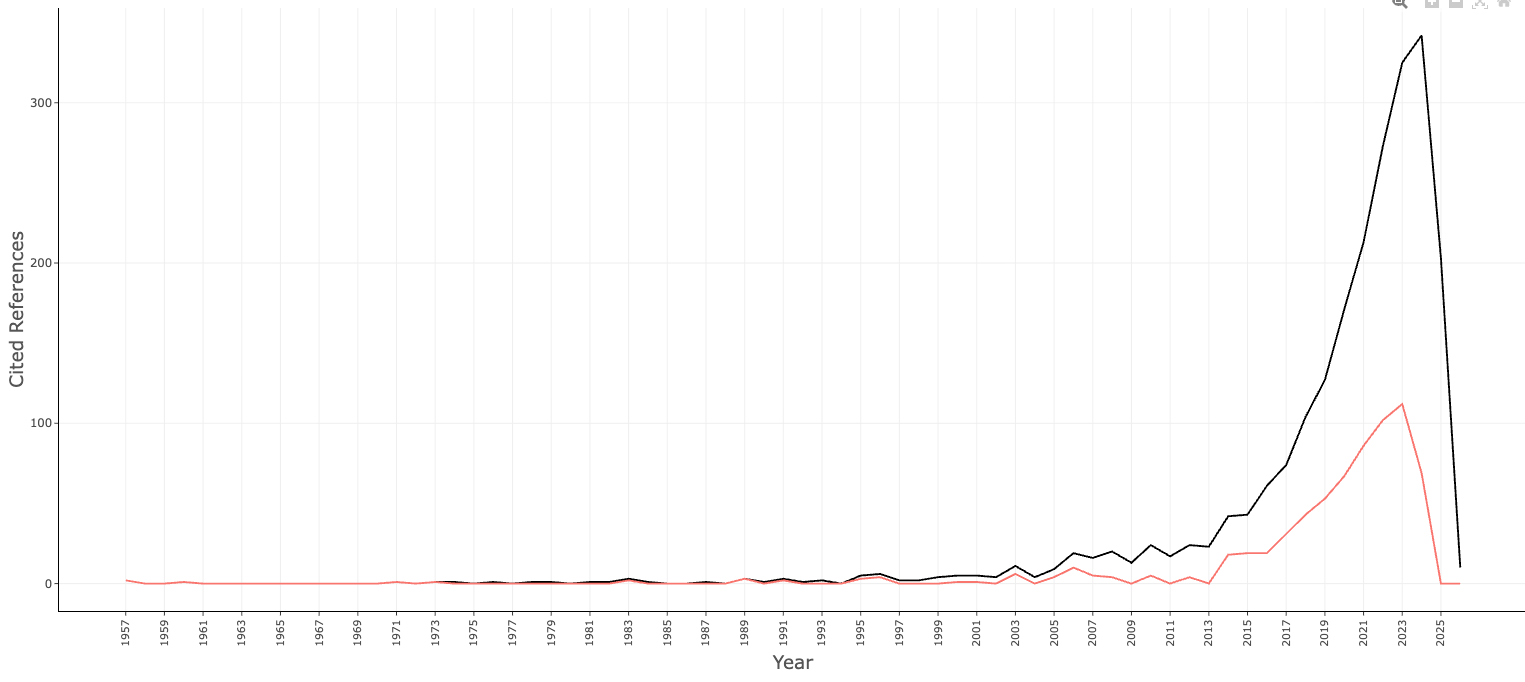
Reference Spectroscopy
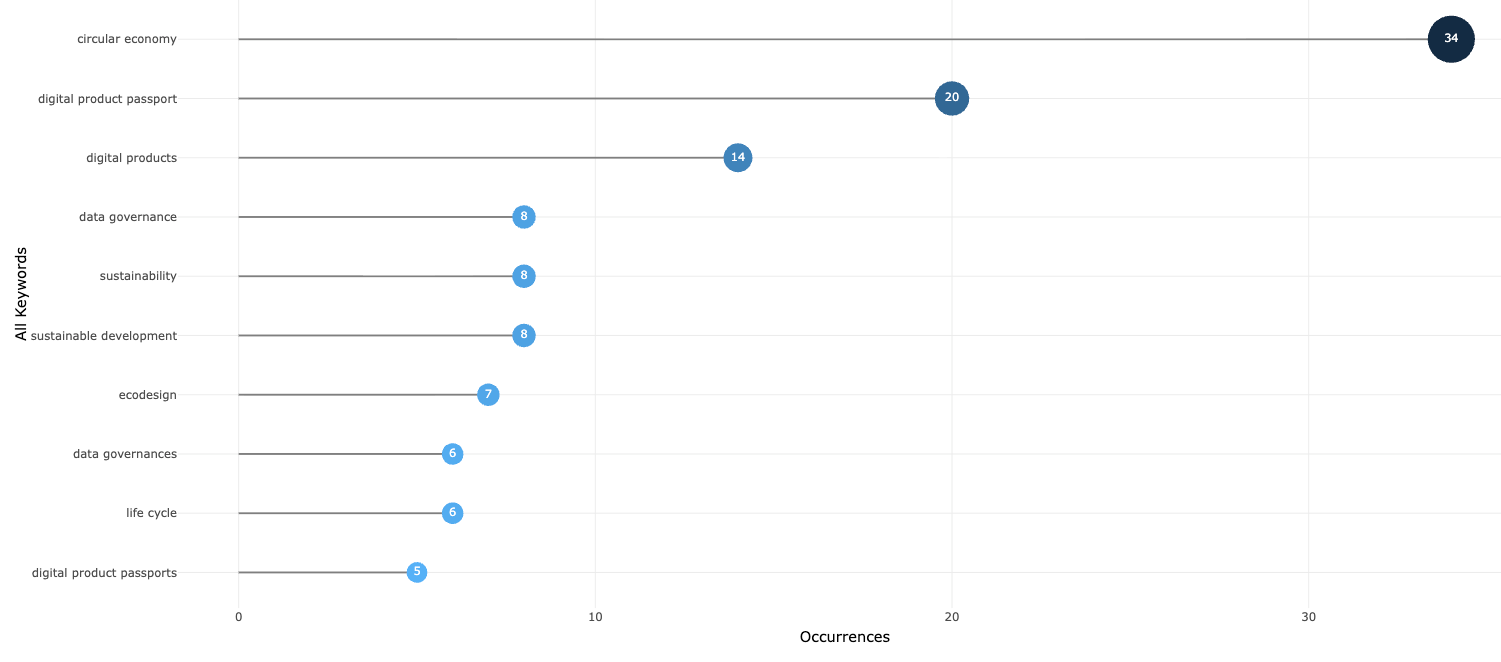
Most Frequent Words
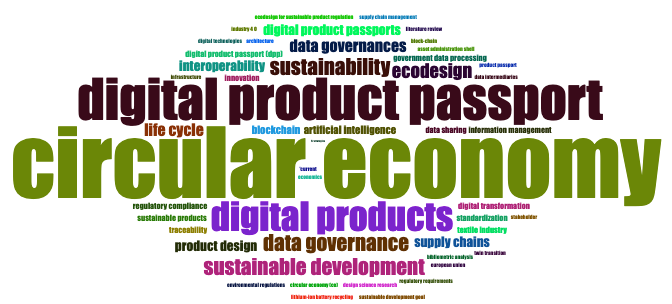
WordCloud
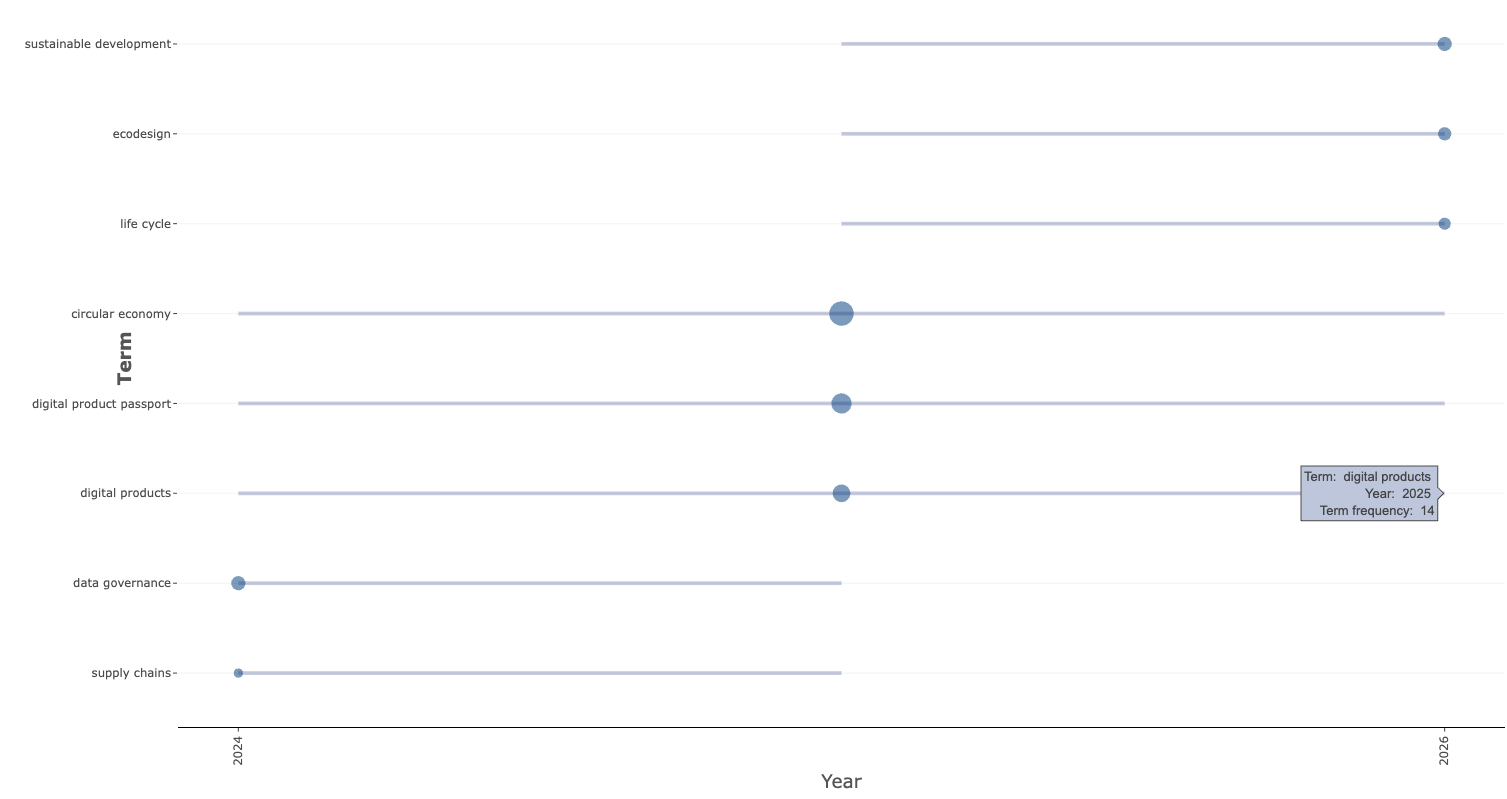
Trend Topics
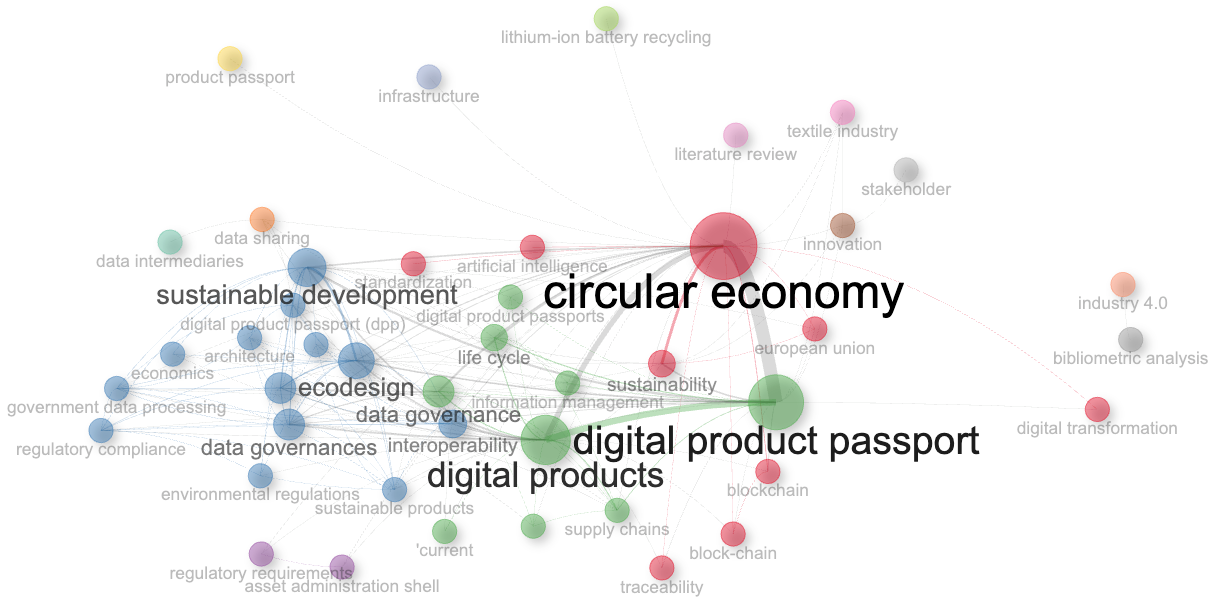
Co-occurrence Network
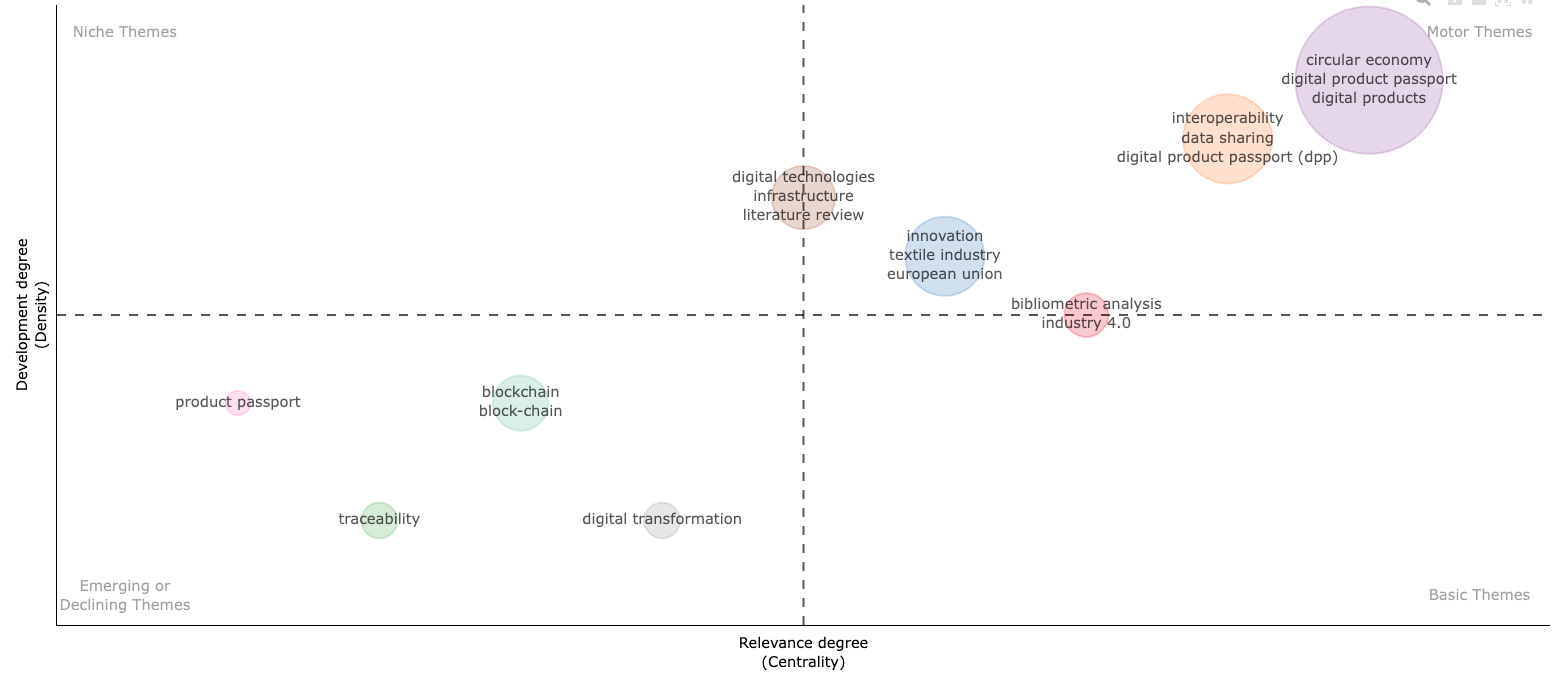
Thematic Map
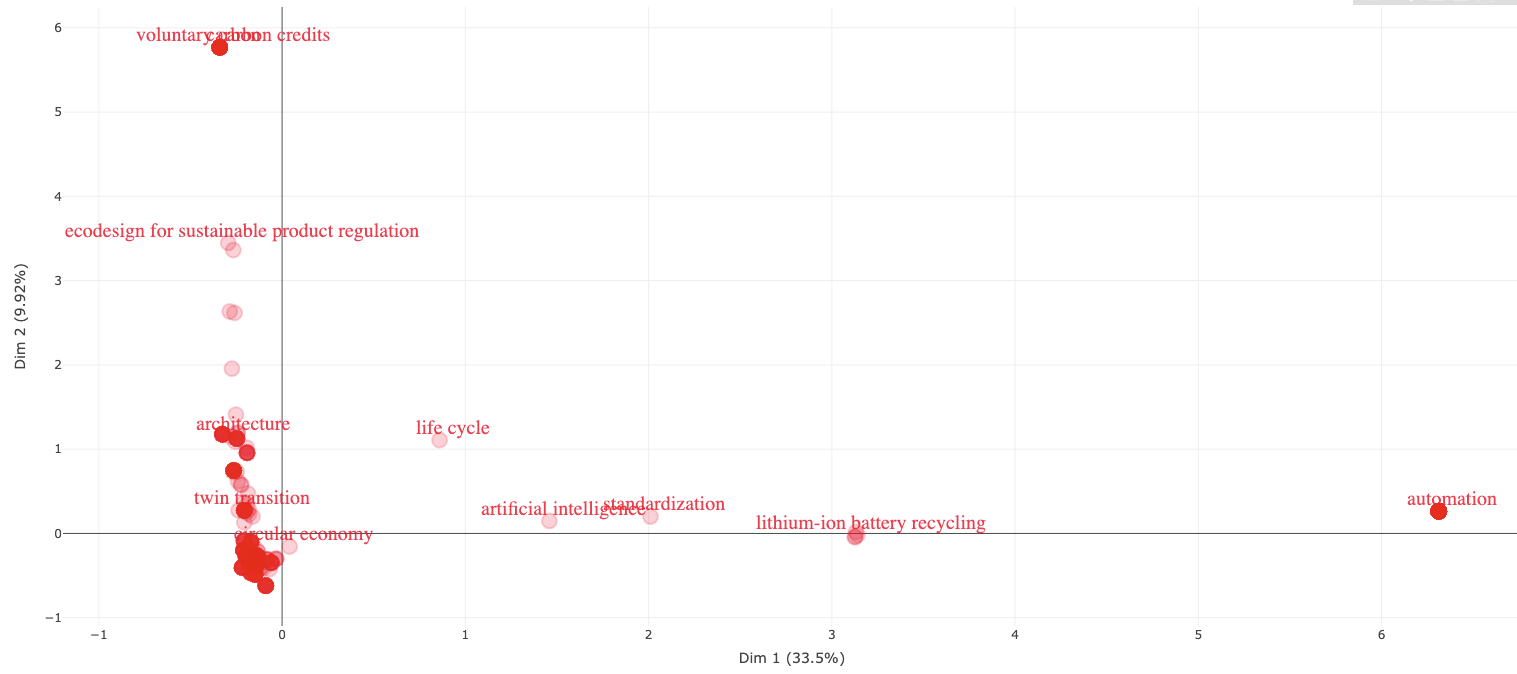
Factorial Analysis
Co-citation Network
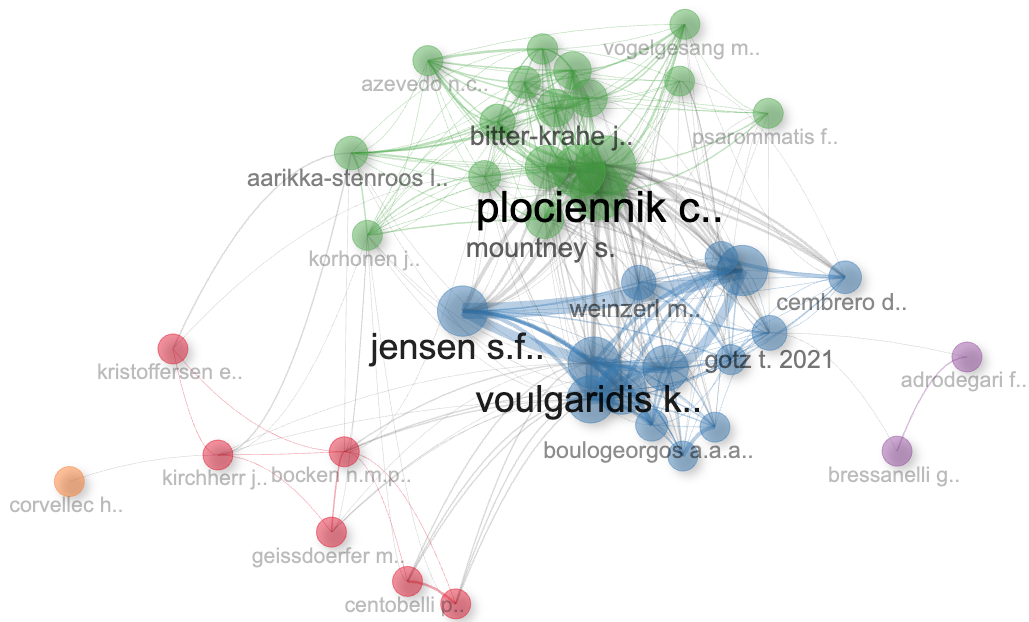
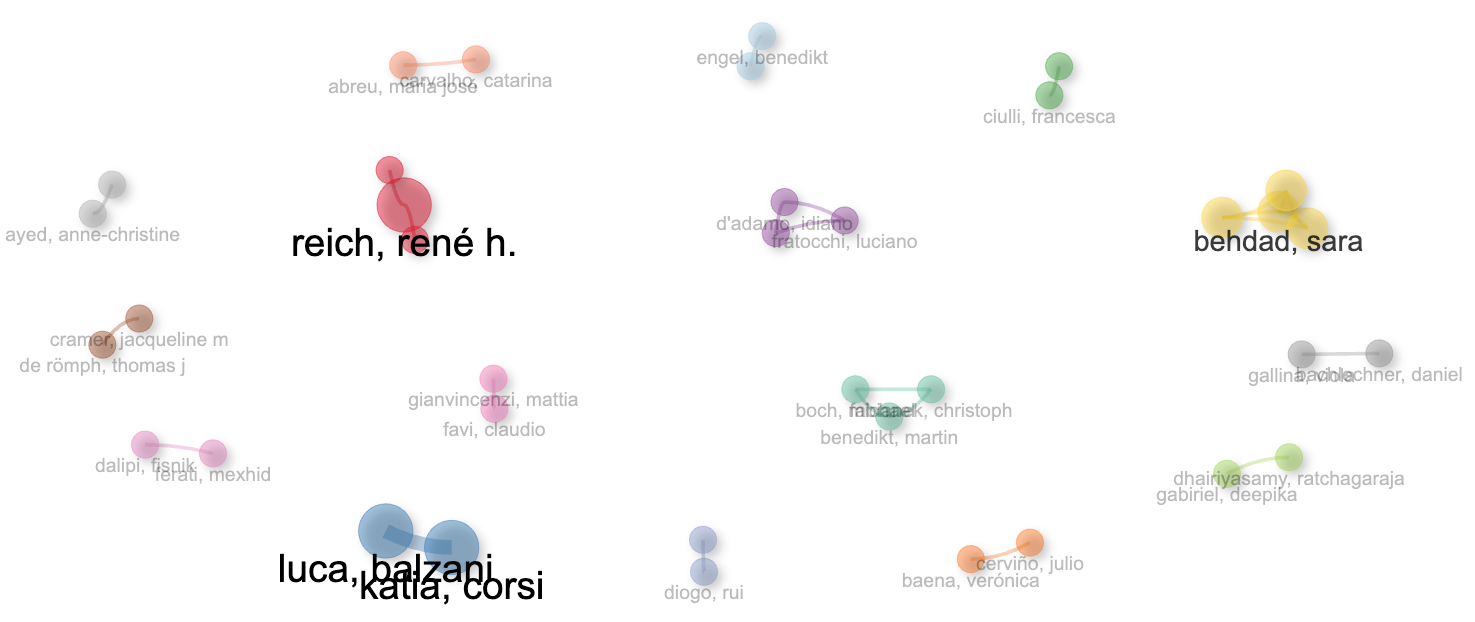
Collaboration Network